If you’ve ever driven through a residential neighborhood, down a country road lined with small farms, or around a commercial business park, you’ve probably glanced at those gray, metal boxes on concrete pads, perched on utility poles, or tucked inside fenced enclosures. Those are distribution transformers—and they’re the unsung heroes of the power grid. As someone who’s spent the last 12 years selling and supporting these units (my team and I have shipped transformers to 17 countries, and I’ve personally walked through over 400 installation sites), I’ve seen firsthand that most people only notice them when they go wrong. A bad installation doesn’t just cause a few hours of flickering lights—it can fry a family’s refrigerator, shut down a small factory, or even trigger a neighborhood power outage that lasts longer than it should. Distribution Transformer
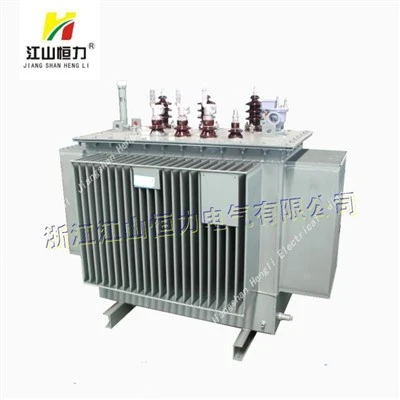
That’s why I want to talk about how to install a distribution transformer correctly. This isn’t just about following a checklist—it’s about respecting the safety rules, knowing your specific site’s needs, and working with a unit that’s designed to do the job you need. When we ship a transformer to a customer, I always make a point to ask if their installation team has hands-on experience. Some folks will say, “We’ve done this a hundred times,” and that’s great—but even seasoned teams can miss a step when they’re in a hurry, or working on a site that’s a little different from the last one. A few years back, we worked with a team in rural Ohio that thought they could skip a ground rod because the soil was soft. That small mistake led to a ground fault during the first storm, and we had to send a technician out at 2 a.m. to fix it. That’s the kind of headache I want to help you avoid.
Let’s start with the planning phase, because this is where 80% of installation problems get sorted out before you even touch the transformer. First, you need to match the transformer to your site’s load. This isn’t as simple as grabbing the unit that comes closest to your kilowatt (kW) number. You have to account for future growth, too. I once had a café owner in Austin, Texas, order a 50 kVA transformer for their new shop. When they called a year later to say it was overloaded, I learned they’d added three new espresso machines, a commercial oven, and a heat pump—none of which they’d mentioned in the initial order. That’s why we always recommend adding 20-25% extra capacity for future use, even if it costs a little more upfront. It’s a tiny investment that saves you from having to replace the transformer in three years.
Next, site assessment is non-negotiable. You need to check three key things: access, clearance, and environmental conditions. Access means not just how you’ll get the transformer to the site, but where you’ll set it. If it’s a pad-mounted transformer (the most common for residential and small commercial sites), you need a flat, level concrete pad that’s at least 12 inches larger than the transformer on all sides. No cracks, no soft spots, no vegetation growing around the base. For pole-mounted units, the pole has to be rated to hold the transformer’s weight. A standard 50 kVA transformer weighs around 800 pounds—so a 30-foot wooden pole might not cut it for larger units. Clearance is about space around the transformer to let air circulate. Overheating is one of the top causes of transformer failure, so you can’t tuck a unit against a wall or under a low-hanging tree. The National Electrical Safety Code (NESC) requires at least 3 feet of clear space around all sides of pad-mounted transformers, and 10 feet of vertical clearance above pole-mounted ones. And environmental conditions: if your site is near salt water (like a coastal area), you need a corrosion-resistant transformer with stainless steel hardware, not a standard steel unit. If it’s in a dusty desert, you need a unit with sealed vents to keep dust out.
Once your planning is done, it’s time for pre-installation preparation. This is where safety starts—always, always, make sure the power is off at the source before you do any work. I can’t stress that enough. Even if the line is marked as “dead,” double-check it with a voltage tester. I’ve seen a tech get a minor shock because a line was accidentally left live, and it’s not worth the risk. You’ll need the right tools, too: insulated gloves, a voltmeter, a torque wrench (to tighten connections to the manufacturer’s specs—over-tightening or under-tightening is a common mistake), ground rods, a ground clamp, and a lifting strap that’s rated for the transformer’s weight. If you’re using a crane or a forklift to move the unit, make sure the lifting points are marked on the transformer—never use the pipes or wires as handles. Those are delicate parts, and you can damage them just by trying to lift the unit that way.
Now, let’s get to the actual installation, and I’ll walk you through the two most common types: pad-mounted and pole-mounted, since those are what most of our customers use.
First, pad-mounted transformers. This is the type you’ll see in most suburban neighborhoods, tucked behind a small fence. Start by placing the transformer on the concrete pad, level it, and make sure there’s no gap between the pad and the unit’s base. If there’s a gap, you can add a small amount of non-shrink grout to fill it—this prevents water from getting underneath, which can cause corrosion over time. Next, the ground system. This is another step that’s easy to mess up. You need to drive at least two ground rods, each 8 feet long, 10 feet apart from each other, right next to the transformer’s ground terminal. The ground clamp has to be tightened to the terminal with a torque wrench—usually around 50 foot-pounds, but always check the manufacturer’s specs, because different units are different. For the primary and secondary connections: the primary is the high-voltage line coming from the utility, and the secondary is the low-voltage line going to your building. You have to use the correct size wire for the load—we always send a wire sizing chart with every transformer, so don’t guess here. Tighten the connections with your torque wrench, and cover them with insulated boots to prevent accidental contact. Finally, lock the transformer’s cabinet—most come with a built-in lock to keep people out, which is both a safety measure and a security one.
Now, pole-mounted transformers, common for rural areas, small streets, or sites where there’s no room for a concrete pad. First, make sure the pole is straight and securely set in the ground (or anchored with a cross-arm if it’s a light pole). The cross-arm has to be rated for the transformer’s weight. Attach the mounting brackets to the pole, following the manufacturer’s instructions—usually, the transformer is mounted 8 to 10 feet above the ground, so no one can touch it. Next, lift the transformer onto the brackets, and secure it with U-bolts. Use a level to make sure the transformer is straight—if it’s tilted, the oil inside can shift unevenly, which affects performance. Then, the ground system: same as pad-mounted, drive two ground rods next to the pole, connect them to the transformer’s ground terminal. Again, double-check all connections with a voltage tester before moving on. The primary lines run from the utility lines on the pole to the transformer’s primary terminals, and the secondary lines run down from the transformer to your building’s service head. Make sure all lines are tied securely to the pole, and that there’s enough slack to account for temperature changes (lines expand in the heat, contract in the cold).
Wait, there’s one step I almost forgot: filling and testing the oil, if your transformer is an oil-filled unit. Most distribution transformers are oil-filled, and they need to have the correct amount of oil to work. When we ship them, they’re usually partially filled, so you have to top them off with the correct type of oil (mineral oil, usually, unless it’s a special unit) after installation. The oil level should be at the “full” mark on the gauge, when the transformer is at the ambient temperature of your site. If it’s too low, the windings can overheat; if it’s too high, it can leak out when the unit heats up. Then, after installation, you have to do a few tests to make sure everything is working. The main ones are a continuity test to check that all windings are intact, a insulation resistance test to make sure there’s no leakage between lines and ground, and a voltage test to confirm that the output is correct. We always recommend having a licensed electrician or a power utility technician do these tests—this isn’t the time to cut corners.
Even if you do everything right, there are a few common post-installation mistakes that cause problems. The most common one is not keeping the site clear of debris. Leaves, dirt, and snow can build up around the transformer, blocking airflow and causing overheating. Every three months, I tell our customers to check the area around the transformer, clear away any vegetation, and make sure the vents are not blocked. Another one is not following up with maintenance. A distribution transformer doesn’t need a lot of work, but it does need annual checks: oil level, ground connections, tightness of terminals, and corrosion on the cabinet. I had a customer in Florida who skipped maintenance for four years, and by the time they called us, the ground connections were corroded so badly the transformer was on the brink of failing. It cost them thousands in lost production, compared to the $200 it would have cost for an annual check.
Now, let’s talk about when you should call in a professional. I know some small business owners try to save money by doing the installation themselves, but there are times when it’s just not worth the risk. If you’re not licensed to work with high-voltage lines, don’t do it. The primary lines from the utility are 7,200 volts or higher—one wrong move, and you can be seriously injured. Even if you have experience with low-voltage wiring, high-voltage is a whole different ballgame. Also, if your site has unusual conditions: rocky soil that makes driving ground rods hard, a steep slope where a concrete pad isn’t stable, or a unit larger than 100 kVA. Those are situations where a professional with experience in distribution transformers will catch issues you might miss.
At the end of the day, installing a distribution transformer correctly is about three things: planning ahead, following safety rules, and taking the time to do each step right. It’s not complicated, but it’s not something you can rush through either. We’ve seen a lot of customers cut corners to save a little time or money, and it almost always comes back to bite them. The good news is that if you work with a reputable supplier, they’ll give you all the information you need, from load sizing to maintenance schedules.
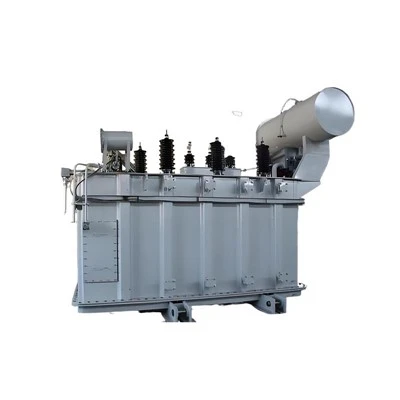
If you’re planning to install a new distribution transformer, or you have an old one that’s causing issues, we’re here to help. Our team has been working with sites like yours for over a decade, and we can answer any questions you have about sizing, installation, or maintenance. Whether you’re a residential builder, a small factory owner, or a utility company, we’ll make sure you get the right unit for your needs, and we can connect you with trusted installers in your area if you need them. Don’t wait until a small mistake turns into a big problem—reach out, and let’s make sure your power setup works as smoothly as it should.
Box Type Transformer References
- National Electrical Safety Code (NESC) Standard 2023. Institute of Electrical and Electronics Engineers, 2022.
- Distribution Transformer Installation and Maintenance Guide. Institute of Electrical and Electronics Engineers, 2021.
- Occupational Safety and Health Administration (OSHA) Electrical Safety Guidelines for Power Generation, Transmission, and Distribution. U.S. Department of Labor, 2020.
- Transformer Oil Specifications and Handling Procedures. American Society for Testing and Materials (ASTM) International, 2019.
Zhejiang Jiangshan Hengli Electrical Co., Ltd.
Zhejiang Jiangshan Hengli Electrical Co., Ltd. is one of the most professional distribution transformer manufacturers and suppliers in China, featured by quality products and low price. Please rest assured to wholesale cheap distribution transformer in stock here and get pricelist from our factory. Customized orders are welcome.
Address: 212 Fuzhu Street Sidu Town, Jiangshan, Zhejiang, China
E-mail: henglijs@foxmail.com
WebSite: https://www.henlypower.com/
