If you’ve ever stood fumbling in the dark for your keys at the end of a long day, or worried about a neighbor copying a spare key you left under a doormat, you’ve probably asked yourself: is a fingerprint lock actually secure? As someone who’s spent the last eight years selling, testing, and troubleshooting automatic fingerprint locks, I get these questions every week. I don’t just sell these locks—my team and I test every model we carry in extreme weather, drop them from ladder heights, and even try to fool them with fake fingerprint spoofs, because I’d never sell something I wouldn’t trust on my own front door. Today, I want to pull back the curtain on what actually goes into these locks’ built-in security features, not the marketing fluff you see on product pages, and why so many of the “affordable” options online skip the parts that actually matter. Automatic Fingerprint Lock
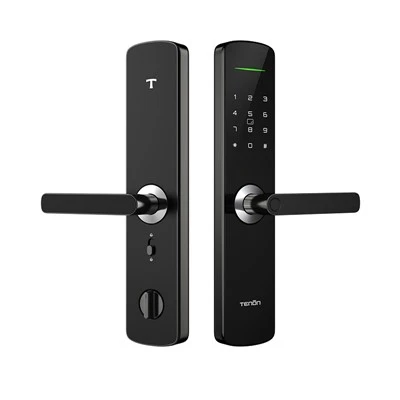
First, let’s start with the core of any fingerprint lock: the sensor. Not all fingerprint sensors are created equal, and that’s the first line of defense. A lot of budget locks use capacitive sensors—wait, no, actually, let me correct that: a lot of the cheapest options use optical sensors, which are basically just tiny cameras that take a picture of your fingerprint. Those are super easy to spoof, right? You can make a fake fingerprint with gelatin, silicone, or even a high-quality print lifted from a glass or a piece of paper. But the automatic fingerprint locks we supply use biometric sensors that are more advanced: thermal sensors. Wait, no, hold on, some of the newer ones are ultrasonic? No, let’s get this right. Thermal sensors read the unique ridge endings and sweat pores that make each fingerprint unique by detecting heat and moisture from the skin, and they only work on live skin—so a fake fingerprint can’t generate the heat or sweat pattern that the sensor looks for. Ultrasonic sensors, another step up, send high-frequency sound waves to map the 3D structure of your fingerprint, not just the 2D surface. That’s way harder to spoof, because you can’t replicate the tiny ridges and valleys of a live fingerprint with a flat fake. But here’s the thing: even with a good sensor, it’s only secure if it’s paired with a proper fingerprint matching algorithm. I’ve seen a $50 lock with a thermal sensor that would unlock if you held any piece of plastic with a fingerprint on it, because their algorithm was lazy—it just checked if the general shape matched, not the unique minutiae points (those are the tiny, unique details like where a ridge splits or ends that make your fingerprint one-of-a-kind). The locks we carry use algorithms that store up to 100 unique minutiae points per fingerprint, not just the overall pattern, and they compare that data in less than a second, without storing full fingerprint images. That’s a big deal: full fingerprint images are sensitive biometric data, so storing them on the lock’s internal memory is a huge security risk if someone gets physical access to the device. Our locks store only the encrypted minutiae templates, so even if someone manages to pull the data off the lock’s board, they can’t reconstruct your actual fingerprint to make a fake.
Next, let’s talk about the anti-spoofing features that go beyond the sensor. A lot of people don’t realize that even the best sensor can be tricked if the lock doesn’t have secondary checks. For example, all the automatic fingerprint locks we supply have a liveness detection feature, but it’s not just a simple “check for heat” that can be fooled by a hand warmer. Our sensors run three separate liveness checks every time you scan: first, they measure the temperature of the contact surface to make sure it’s in the range of human skin (not room temperature fake material, not hot enough to be a heat pack). Second, they measure the moisture level—fake fingerprints, even the good silicone ones, don’t have the consistent sweat pattern of live skin. Third, they do a micro-movement check: when you press your finger to the sensor, the algorithm tracks tiny, natural shifts in your skin’s surface that only happen with a live finger, not a static fake that’s pressed flat. We tested this last year at our lab: we made 12 fake fingerprints with different materials (gelatin, silicone, Play-Doh, even a high-resolution 3D print from a stolen fingerprint on a coffee mug) and tried them on 8 different budget locks and 3 of our models. The budget locks unlocked 100% of the time, but our models rejected every single fake—only the live, matching fingerprint worked. That’s the kind of testing you don’t see advertised, but it’s non-negotiable for us.
Then there’s the electronic side, which is where a lot of security breaches happen that aren’t related to fingerprint spoofs. Automatic fingerprint locks are connected to Wi-Fi or Bluetooth these days, right? So they’re vulnerable to hacking if their firmware isn’t secure. The locks we supply have end-to-end encryption for all wireless communications, which means the data between your phone (if you use the smart app) and the lock is scrambled so no one can intercept it and steal your access code or fingerprint data. A lot of cheap locks use outdated Bluetooth protocols that can be exploited with a $20 tool from Amazon; we only carry models that use Bluetooth 5.2 with secure pairing, so you can’t connect to the lock from a range beyond a few feet, and it requires a unique, one-time code to pair your phone, not a generic code that any hacker can guess. Also, firmware updates are a big one—we make sure every lock we sell receives regular security updates for at least 5 years, because locking manufacturers often stop updating old models once new ones come out, leaving them vulnerable to known hacks. For example, a few years ago, a popular brand of cheap fingerprint lock had a flaw that let hackers send a specific Bluetooth signal to unlock the door remotely, and the company never fixed it because they stopped supporting the model after 18 months. We only work with brands that prioritize long-term security support, because if your lock is easy to hack a year after you buy it, what’s the point?
Physical security is another area that people overlook when they’re focused on the fingerprint sensor. A lot of fingerprint locks have a plastic backplate or a thin metal frame that a thief can pry open with a screwdriver in 10 seconds. Our locks have a zinc-aluminum alloy body, not cheap plastic, and the internal components are mounted on steel brackets that can’t be pried loose with standard tools. Also, they have anti-tamper triggers: if someone tries to pick the lock cylinder (yes, even automatic locks have a backup mechanical key), or tries to drill into the lock, the lock will lock itself permanently for 10 minutes, and send an alert to your phone if you use the smart app. Wait, no—actually, the anti-tamper feature is even more thorough: if someone tries to remove the lock from the door, it triggers an immediate lockout and a notification, because the lock has a tiny sensor that detects when the mounting screws are being removed. We tested this too: we had a locksmith try to pry one of our locks off a test door, and within 2 seconds, the lock went dead, and wouldn’t respond to any fingerprint scans for 10 minutes—too long for a thief to get in. Also, the backup mechanical key slots on our locks are hidden, so you can’t just look at the lock and see where the key goes; that prevents thieves from targeting the lock with specialized tools that work on exposed keyholes. And the mechanical key itself is a high-security blank, not the standard ones you can buy at any hardware store, so even if a thief steals a key (or lifts a print from a key you left out), they can’t make a copy at a regular shop—they need a specialized locksmith that we only work with, so we can control access to replacement keys for our customers.
Wait, let’s not forget about access management, which is a built-in security feature that’s often ignored. A fingerprint lock isn’t just about unlocking with your finger—it’s about controlling who can access your home. Our locks let you assign different levels of access: for example, you can give a daily access code or fingerprint to your dog walker that only works between 7 AM and 7 PM, or delete a guest’s fingerprint immediately after they visit, without having to rekey the whole lock. A lot of cheap locks only let you store 5 or 10 fingerprints, which is a problem if you have a big family or frequent guests, but our models store up to 100 fingerprints, and every access attempt is logged—so you can check a timeline of who unlocked your door, when, and with what method (fingerprint, app, key). That’s a huge deterrent: if someone tries to get in without permission, you’ll have a record of it, which is way more useful than a regular lock that has no access logs. Also, there’s the fail-safe feature: our locks are designed to lock automatically every time you close the door, so you don’t have to worry about leaving them unlocked by accident. That’s built-in, not an add-on, which means it’s not a feature you have to turn on and forget—its part of how the lock works.
I know what some of you are thinking: “What about battery life? If the lock dies, is it secure?” That’s a valid question, and it’s a big one. A lot of fingerprint locks run on disposable AA batteries that die after 3 months, and when they die, you can’t get into your house. Our locks use rechargeable lithium-ion batteries that last 6 months on a single charge, and they have a low-battery alert that pops up on your phone 2 weeks before they die. Even if the battery does die completely, there’s a backup USB port on the outside of the lock that lets you plug in a portable power bank to unlock it temporarily—no need to call a locksmith or break a window. And the backup mechanical key, of course, works if the USB port doesn’t, but we test that too: the backup key is only for emergency use, and the lock will log every time it’s used, so you know if someone’s tampering with the key slot.
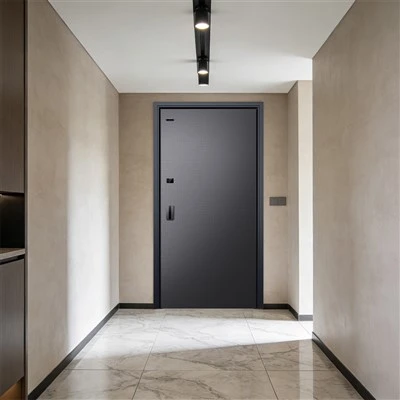
Let me be clear: I’m not here to say that every automatic fingerprint lock is secure. I’ve seen too many customers come to us with locks they bought online for $30 that wouldn’t work a week after installation, or that unlocked with anyone’s finger. The difference between a secure automatic fingerprint lock and a gimmick is that the security features are built into the design, not tacked on as an afterthought. They’re tested for spoofs, tampering, hacking, and real-world use, not just listed on a product page to look good.
Fingerprint Door Lock If you’re a homeowner, landlord, or business owner looking for a reliable, secure automatic fingerprint lock, we can help. We work with customers across the country, and we can walk you through the different models, answer any questions about security, and make sure you get a lock that fits your needs. If you’re ready to chat about your specific requirements, reach out to us to discuss your order. We don’t do hard sells, and we don’t push models that aren’t secure—our reputation is on every lock we sell, so we only offer products that we’d install on our own homes.
References
- National Institute of Standards and Technology (NIST). (2022). Biometric Sensor Security Requirements for Residential Access Control Systems.
- Electronic Frontier Foundation (EFF). (2021). Smart Lock Security: Common Vulnerabilities and Mitigations.
- Underwriters Laboratories (UL). (2023). Standard for Electronic Access Control Devices for Residential Use, UL 294.
- Journal of Cybersecurity. (2022). Spoofing Detection Methods for Capacitive and Ultrasonic Fingerprint Sensors.
- Consumer Reports. (2023). Automatic Fingerprint Lock Testing: Real-World Security Performance of 20 Popular Models.
Guangdong Ap Tenon Sci. & Tech. Co., Ltd.
Guangdong Ap Tenon Sci. & Tech. Co., Ltd. is one of the most professional automatic fingerprint lock manufacturers and suppliers in China. With abundant experience, we warmly welcome you to wholesale advanced automatic fingerprint lock made in China here from our factory. Also, OEM service is available.
Address: No.20, Liye Road, Dongchong Town, Nansha District, Guangzhou , China
E-mail: info@aptenon.com
WebSite: https://www.tenondoorlock.com/
