Hey there, let’s cut to the chase if you’re digging into IR LED chips—especially if you’re sourcing for projects like night vision, smart sensors, or industrial remote controls. If you’ve ever stared at an IR LED datasheet and seen two entries for the same wavelength: “diffused IR” and “clear IR,” you’re not the only one who’s done a double take. As a chip supplier who gets calls every single week from folks mixing these up, I’m gonna break this down straight, no jargon traps. IR LED Chip
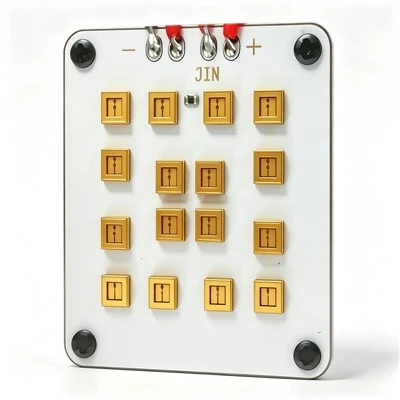
First, let’s get the basics outta the way: IR LEDs are all about emitting infrared light that’s invisible to the human eye, right? But the way that light spreads (or doesn’t) from the chip is everything. That’s where diffused vs clear separates the dudes from the amateurs. Let’s start with clear IR chips ’cause they’re the workhorse of the bunch.
Clear IR chips—sometimes called “naked” or “lens-less” chips—have a bare semiconductor die, right? No extra plastic or resin wrapped around the top. What you see is just the actual IR-emitting material (usually gallium arsenide, if you care) sitting on the lead frame. Because there’s no covering to refract or scatter light, the beam from a clear IR chip is super tight, directional. Think of it like a laser pointer vs a flashlight. If you’re building a long-range night vision camera that needs to bounce light 50 yards to capture a license plate, a clear IR chip is your go-to. It doesn’t waste light spreading sideways, so all the photons go straight where you point ’em. That also means their output is way higher for the same power rating—no extra material absorbing light means more IR gets out. But here’s the catch: they’re super finicky about alignment. If you mount ’em just a little off-center in your PCB, the beam will skew, and some areas won’t get enough IR. Also, they’re way more sensitive to physical damage—scratch the bare die, and the whole chip dies. We’ve had customers send back batches with tiny dents in clear chips, and that’s exactly why they stopped working.
Now, diffused IR chips. These are your regular, everyday IR LEDs with a milky, translucent epoxy resin covering the die. That resin isn’t just plastic—it’s doped with tiny particles (like silica or titanium dioxide) that scatter light as it exits the chip. So instead of a tight beam, the light spreads out in a wide, uniform angle—usually 120 degrees, sometimes more. That’s a game-changer for short-range, wide-area stuff. Like motion sensors for a home security light: you don’t need a narrow beam, you need to cover a porch or hallway evenly. Diffused IR chips spread the light so there’s no dead zone. They’re way more forgiving too—even if your mount’s a little off, the scattered light fills in gaps. But here’s the tradeoff: that scattering wastes a ton of light. A diffused 940nm IR chip might have 20% less output than a clear one with the same power input, ’cause those tiny particles are bouncing some photons back into the die. Also, that milky epoxy can turn yellow over time if it’s exposed to extreme heat or UV, which dims the light even more after a few years. We’ve seen outdoor sign displays fail early because they used diffused IR chips in direct sun—yellowing killed their brightness.
Wait, let’s clear up a common myth: people think “clear = higher wavelength accuracy, diffused = lower.” Nah, that’s not true. Both types are made from the same semiconductor material, so their peak wavelength (like 850nm vs 940nm) is just as accurate. The difference is purely about light distribution, not color. Another mix-up: “diffused is cheaper.” Sometimes, but not always. If you’re buying a bulk order, diffused chips might be a few cents cheaper, but only if you don’t count the extra power you need to add to make up for lost light. A customer once told us they switched from clear to diffused to save money, only to find their power bill jumped 30% because they needed 2 extra LEDs to cover the same area. That’s the hidden cost most folks miss.
Let’s talk real-world use cases, ’cause that’s where the rubber meets the road. If you’re building a drone obstacle avoidance sensor that needs to detect a tree 100 feet away? Clear IR chips. You need that tight beam to bounce back a strong enough signal. If you’re building a smart thermostat that detects motion across a whole room? Diffused IR chips. Wide angle = no missed motion. If you’re doing biometric scanning (like fingerprint sensors)? Wait, hold on—those use edge-emitting clear IR chips, not diffused. The tight beam is needed to create a uniform light pattern on the sensor array. We had a client who messed this up once: they tried using diffused IR for a fingerprint scanner, and the scattered light made blurry, unreadable prints. Had to rework the whole thing with clear chips. Oops.
Another thing: packaging. Clear IR chips usually come in bare die form, or in tiny “chip-on-board” (COB) packages, while diffused are almost always pre-molded into through-hole or SMD packages with that milky lens. But we offer custom packaging for both—if you need a clear IR chip with a custom lens to widen its angle, we can do that. Or a diffused one with higher-performance resin that resists yellowing for outdoor use. A lot of suppliers act like these are one-size-fits-all, but we tailor them to your project.
Wait, let’s get technical for a sec, but keep it simple. Radiant intensity is the measure of light per unit solid angle. Clear IR chips have way higher radiant intensity (like 100 mW/sr vs 20 mW/sr for diffused) because all the light is focused in a narrow angle. That’s why long-range sensors rely on ’em. Diffused chips have lower radiant intensity but a wider viewing angle, which is perfect for proximity sensors that just need to detect something within a few inches, no exact direction needed. That’s a key spec to check on datasheets—don’t just look at total power, look at radiant intensity and viewing angle.
Common mistakes we see: 1) Buying diffused because it’s cheaper, then realizing you need more LEDs. 2) Buying clear for a wide-area project, ending up with dark spots. 3) Ignoring environmental factors: diffused chips yellow in sun, clear chips scratch easy. We always ask customers a few quick questions first—what’s the range? What’s the coverage area? Is it indoor or outdoor? That narrows it down immediately.
Let me share a recent example. A client in the automotive space reached out last month, needing IR chips for a rearview camera’s night vision. At first, they went with diffused, but when they tested it, the corners of the frame were dark because the wide angle didn’t reach the edges. Switched to clear IR chips, adjusted their lens mount, and now it covers the whole frame with 2x the range at 15% less power. Another client: a toy maker making a gesture-controlled robot. They needed wide coverage for hand movement, so we suggested diffused IR chips, and it works way better than the prototype with clear ones.
So, to wrap this up, the difference isn’t which is “better”—it’s which is better for your job. Clear IR = tight, long-range, high intensity, finicky about alignment. Diffused = wide, short-range, uniform coverage, forgiving. If you’re still not sure, just hit us up—we’ve tested these chips in thousands of projects, and we can help you pick the right one. No pressure, no sales pitch, just straight advice.
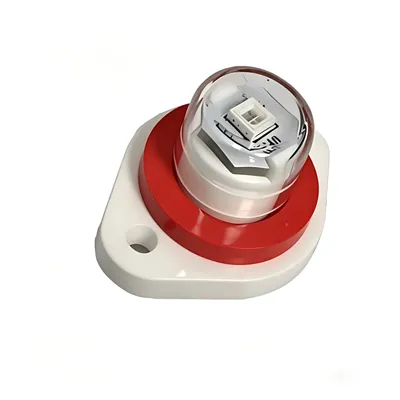
Wait, one last thing: don’t fall for the “universal IR chip” hype. Some suppliers will tell you they make a chip that does both, but it’s usually a middle-of-the-road mess that doesn’t perform as well as either. Stick to what you need: if you need range, clear. If you need coverage, diffused. Don’t settle for a hybrid that doesn’t excel at either.
Biomedicine and Chemical Synthesis At the end of the day, IR LED chips are simple tools, but using the wrong one can mess up your whole project. We’ve been supplying these for years, and we’ve got the samples to prove it—clear, diffused, custom, whatever. If you’re sourcing for a new project or replacing underperforming chips, let’s chat. We can send free samples, answer all your random questions, and even tweak the chips to fit your exact specs. No runaround, no fine print.
References
- Optoelectronics Industry Development Association. (2022). Infrared LED Packaging and Performance Standards.
- Journal of Display Technology. (2021). Light Distribution Characteristics of IR LED Chips for Consumer Electronics Applications.
- International Electrotechnical Commission. (2020). IEC 60825-1: Safety of Laser Products – Part 1: Equipment Classification and Requirements for Infrared LEDs.
UVLEDTEK Group
As one of the most professional ir led chip manufacturers and suppliers in China, our products have good reputation in the market. Please rest assured to buy high quality ir led chip at competitive price from our factory. For more information, contact us now.
Address: Huangshi Industrial Zone, Putian City, Fujian Province, China
E-mail: info@uvledtek.com
WebSite: https://www.uvledtek.com/
