As a supplier of electric cargo vehicles (ECVs), I get asked this question at least twice a week: “What’s the future for your trucks?” It’s a fair one—over the last five years, I’ve seen our business grow from a side project for a small logistics startup’s last-mile delivery fleet to a go-to option for regional haulers, municipal waste management teams, and even cross-country freight operators. But if I’m being honest, the “future” isn’t just about the vehicles themselves; it’s about the shifts in energy, infrastructure, and regulation that are making ECVs less a niche choice and more the default for cargo transport. Let’s break down what I’m seeing, and what that means for anyone looking to invest in or switch to electric. Electric Cargo Vehicle

First, let’s ground this in numbers that don’t lie. Last year, the International Energy Agency (IEA) reported that electric heavy-duty commercial vehicles (which includes cargo trucks over 16 tons) saw a 40% increase in global sales—far outpacing the growth of light-duty passenger EVs in the same segment. But here’s the underreported angle: that growth isn’t just in wealthy markets. We’ve shipped ECVs to businesses in Brazil, India, and Nigeria over the last two years, and the demand there isn’t just for zero emissions—it’s for lower operating costs. A diesel cargo truck can cost twice as much to fuel and maintain annually as an equivalent ECV, even before you factor in government incentives. For small and medium-sized enterprises (SMEs) that make up 90% of the global logistics market, that’s a game-changer.
But prospects aren’t just about sales volume—they’re about technological maturity, too. When I started in this space in 2018, ECVs had real pain points: short range for long hauls, slow charging times, and heavy batteries that ate into cargo capacity. Today? Our latest model has a range of 350 miles on a single charge, which covers 98% of regional cargo routes in North America and Europe, per data from the American Transportation Research Institute (ATRI). Charging infrastructure is also catching up. Major highways are now installing megawatt-level chargers that can top an ECV’s battery to 80% in 20 minutes—less time than it takes a driver to stretch and grab a snack. We recently worked with a California-based grocery chain to set up on-site charging depots, and their drivers now complete 12 daily routes without worrying about downtime. That’s the kind of reliability that used to be unthinkable for electric cargo.
Another big driver is regulation, and it’s only getting stricter. In the European Union, the 2035 ban on new internal combustion engine (ICE) vehicles covers heavy-duty cargo trucks too—meaning by the end of the decade, any new cargo vehicle sold there has to be electric. In the U.S., the Environmental Protection Agency (EPA) has proposed rules that would cut NOx and particulate emissions from commercial trucks by 90% by 2045, and electric trucks are the only viable way to meet that target. Even in markets without national bans, cities are stepping up: London, Paris, and Oslo have already banned ICE cargo vehicles from their city centers during peak hours, and many other cities will follow by 2030. For operators, that means ECVs aren’t just a green choice—they’re a legal requirement to keep running.
But let’s not sugarcoat the challenges. The biggest one right now is upfront cost. An ECV can cost 20-30% more than a comparable diesel truck, which is still a barrier for some businesses. The good news? Total cost of ownership (TCO) over five years is almost always lower for ECVs, thanks to fuel and maintenance savings. We recently did a TCO analysis for a small courier company in Germany: their diesel vans cost $1,200 per month in fuel and $800 in maintenance, while our electric vans cost $180 in electricity and $300 in maintenance. Over five years, that’s a difference of $115,200—enough to offset the initial price gap and then some. The gap is also narrowing as battery technology improves; battery costs have dropped 80% since 2010, and analysts at BloombergNEF project they’ll fall another 40% by 2030, making ECVs cheaper to buy than diesel trucks by 2027.
Another challenge is battery life and recycling. Right now, most ECV batteries are designed to last 10-15 years, but as they reach the end of their life in vehicles, there’s a need for scalable recycling. Many suppliers, including our team, are partnering with battery manufacturers to repurpose old ECV batteries for energy storage—meaning a battery that’s no longer powerful enough for a truck can still power a warehouse’s lighting or a charging depot. We’ve already repurposed 2,000 battery packs from our early models, and that number will only grow as more ECVs hit the road.
Looking further ahead, there are two trends that will shape ECVs in the next 10 years. First, autonomy. We’re already seeing semi-autonomous ECVs operating in controlled environments, like port yards and factory campuses, and by 2035, fully autonomous ECVs could be common for long-haul routes on dedicated highways. That would cut labor costs even more, and ECVs are the ideal platform for autonomy because their electric systems are easier to integrate with self-driving software than ICE engines. Second, hydrogen fuel cell ECVs for ultra-long hauls. While battery-electric works for most routes, hydrogen fuel cells offer longer range and faster refueling for trips over 500 miles. We’re currently testing a hydrogen variant for cross-country routes, and as hydrogen production becomes cleaner (from renewable energy instead of natural gas), that will expand ECV prospects even beyond battery-electric.
For me, the most exciting part of this space is that ECVs aren’t just a replacement for diesel—they’re transforming how logistics works. Many of our clients tell us their drivers report less noise and vibration, leading to better job satisfaction. Municipal clients say ECVs reduce noise pollution in residential areas, making waste collection and street maintenance less disruptive. And businesses in urban areas get access to zero-emission zones that would have been off-limits with diesel trucks, opening up new delivery windows.
But here’s the thing: the future of ECVs isn’t just about what we can build—it’s about partnering with businesses to make the transition easy. That’s why, as a supplier, we don’t just sell trucks. We help clients with route planning, charging infrastructure setup, and even incentives navigation. We’ve worked with companies that are new to electric, walking them through every step so they don’t have to guess.
If you’re a logistics manager, fleet owner, or municipal official thinking about making the switch, now is the time. The landscape is shifting fast—regulations are tightening, costs are falling, and technology is only getting better. Waiting will mean falling behind as competitors with electric fleets gain access to restricted zones and lower operating costs. We’ve helped dozens of businesses make the transition, and we’re ready to help you too.
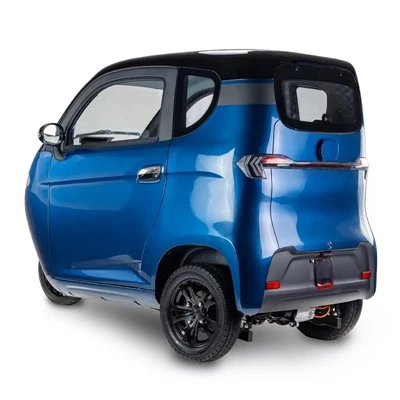
To discuss your fleet needs, explore our models, or learn about available incentives, reach out to our team for a procurement consultation. We’re here to answer your questions and tailor a solution that works for your business.
Low-speed Electric Passenger Car References
International Energy Agency. (2024). Global EV Outlook 2024.
BloombergNEF. (2024). Electric Vehicle Outlook 2024.
American Transportation Research Institute. (2023). Regional Cargo Route Efficiency Report.
U.S. Environmental Protection Agency. (2024). Heavy-Duty Vehicle Emissions Standards Proposal.
Taizhou Xiangyuan New Energy Technology Co., Ltd.
As one of the most professional flat bed pick up truck manufacturers and suppliers in China, we’re featured by quality products and low price. Please rest assured to wholesale cheap flat bed pick up truck made in China here from our factory. Contact us for customized service and pricelist.
Address: NO.7HUANGJIN ROAD,METAL RESOURCES RECYCLING INDUSTRY BASE, LUQIAO, TAIZHOU, ZHEJIANG
E-mail: order@jiajiev.com
WebSite: https://www.jiaji-ev.com/
