Can a Leakage Detection Controller be used in confined spaces? Leakage Detection Controller
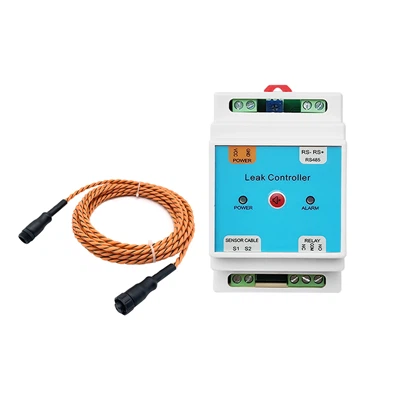
Hey there! I’m a supplier of Leakage Detection Controllers, and this is a question I get asked a lot. You know, confined spaces come with their own set of challenges, and figuring out if our nifty little controllers can work in there is a big deal.
First off, let’s talk about what confined spaces are. These are areas that aren’t designed for continuous human occupancy. Examples include storage tanks, sewers, silos, and even some small rooms with poor ventilation. They’re tricky because they often have limited access and egress points, and the air quality can be really bad. There could be a buildup of toxic gases, flammable substances, or just not enough oxygen for a person to breathe properly.
Now, why would you want to use a Leakage Detection Controller in a confined space? Well, let’s say you’ve got a storage tank that’s supposed to hold some kind of chemical. If there’s a leak, it could be a real disaster. The chemical could contaminate the environment, pose a health risk to anyone nearby, and even cause an explosion if it’s flammable. A Leakage Detection Controller can help you spot these leaks early on, so you can take action before things get out of hand.
One of the main concerns when using a Leakage Detection Controller in a confined space is the environment itself. These controllers rely on sensors to detect leaks, and the conditions in a confined space can affect how well those sensors work. For example, if the air is really humid, it could cause the sensors to malfunction or give false readings. High temperatures can also impact the performance of the sensors.
But don’t worry, we’ve taken all these factors into account when designing our controllers. Our sensors are made to be highly resistant to environmental factors. They can handle a wide range of temperatures and humidity levels without losing their accuracy. We’ve also done a ton of testing in different simulated confined – space conditions to make sure they work properly.
Another thing to consider is the power supply. In some confined spaces, it might be difficult to get a reliable power source. Our controllers can be configured to work with different power options. You can use batteries if there’s no access to mains power. The battery life is pretty long, so you don’t have to worry about changing them too often. And if you do have access to mains power, we’ve designed the controllers to be energy – efficient so they don’t draw too much power.
Communication is also crucial. You need to be able to get the data from the Leakage Detection Controller to a monitoring station where someone can act on it. In a confined space, radio signals might not work well due to the limited space and the presence of walls or other obstacles. That’s why our controllers support multiple communication methods. You can use wired connections if the setup allows, or even some types of short – range wireless protocols that are more reliable in confined spaces.
Safety is our top priority. When using a Leakage Detection Controller in a confined space, there are potential safety hazards. For example, if there’s a flammable gas present, an electrical spark from the controller could cause an explosion. Our controllers are designed to be intrinsically safe. That means they’re built in such a way that they won’t generate enough energy to cause an ignition, even in a potentially explosive atmosphere.
Installation can be a bit of a challenge in confined spaces. There might not be a lot of room to maneuver, and you need to make sure the sensors are placed in the right locations to detect leaks effectively. But our controllers are designed to be compact and easy to install. We provide detailed installation guides, and our technical support team is always available to help you if you run into any issues.
Let’s talk about maintenance. In a confined space, it’s not always easy to access the Leakage Detection Controller for maintenance. That’s why we’ve made our controllers low – maintenance. The sensors have a long lifespan, and they’re easy to replace if needed. There are also self – diagnostic features built into the controller, so it can tell you if there’s a problem with the sensors or any other components.
In terms of cost – effectiveness, using a Leakage Detection Controller in a confined space makes a lot of sense. The cost of installing and maintaining the controller is much lower than the potential cost of a major leak. A single leak could lead to property damage, environmental cleanup costs, and legal liabilities. By investing in our Leakage Detection Controller, you’re basically protecting yourself from all these costly scenarios.
So, to answer the question, yes, a Leakage Detection Controller can definitely be used in confined spaces. Our products are specifically designed to overcome the challenges that come with these unique environments. We’ve got the technology, the reliability, and the support to make sure your confined – space leakage detection needs are met.

If you’re in the market for a Leakage Detection Controller for your confined – space applications, I’d love to talk to you. We can have a detailed discussion about your specific requirements, and I can show you how our products are the best fit for your needs. Just reach out, and let’s start a conversation about keeping your confined spaces safe from leaks.
Leakage Detection Controller References
- "Guidelines for Working in Confined Spaces" by the Occupational Safety and Health Administration (OSHA)
- "Sensor Technology for Leak Detection" in the Journal of Industrial and Environmental Safety
- "Intrinsically Safe Electrical Equipment" from the International Electrotechnical Commission (IEC) standards
Shenzhen Goldkoon Automation Equipment Co., Ltd.
As one of the most professional leakage detection controller manufacturers and suppliers in China, we also support customized service. Please feel free to wholesale advanced leakage detection controller made in China here from our factory. Contact us for more details.
Address: 3rd Floor, Building 3, Mingrenju Industrial Park, No. 10, Maotian Road, Kengzi Sub-district, Pingshan District, Shenzhen City, Guangdong Province, China
E-mail: gold@goldkoon.com
WebSite: https://www.goldkoonsensor.com/
