Hey there! I’m in the business of supplying acoustic noise barriers, and I often get asked this burning question: "Do acoustic noise barriers work for all types of noise?" Well, let’s dive right into it and break things down. Acoustic Noise Barrier
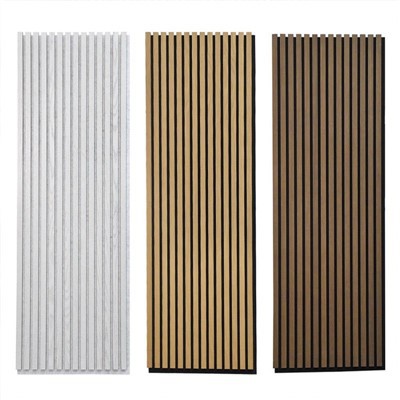
First off, let’s understand what acoustic noise barriers are. They’re basically structures designed to block or reduce the transmission of sound from one place to another. You’ve probably seen them along highways, near industrial sites, or even around construction areas. Their main job is to create a physical barrier that sound waves can’t easily pass through, thus reducing the amount of noise that reaches the other side.
Now, let’s talk about different types of noise. There are two main categories: airborne noise and structure – borne noise.
Airborne noise is the kind that travels through the air. It can come from a variety of sources like traffic, airplanes, and people talking. Acoustic noise barriers are pretty good at dealing with airborne noise. When sound waves hit the barrier, a significant portion of them gets reflected back. Some of the sound waves also get absorbed by the material of the barrier, and only a small amount passes through.
The effectiveness of a noise barrier against airborne noise depends on a few factors. One of the most important ones is the height of the barrier. Generally speaking, the taller the barrier, the better it is at blocking sound. This is because sound waves tend to travel in a straight line, and a taller barrier can create a larger "shadow zone" where the noise level is significantly reduced.
Another factor is the material of the barrier. Different materials have different sound – absorbing and reflecting properties. For example, barriers made of concrete are great at reflecting sound, while those made of porous materials like fiberglass or mineral wool are better at absorbing sound. So, depending on the specific situation, we can choose the right material to maximize the reduction of airborne noise.
However, acoustic noise barriers aren’t a one – size – fits – all solution for airborne noise. High – frequency sounds are generally easier to block than low – frequency sounds. Low – frequency noise, like the rumble of a large truck engine or the bass from a concert, has longer wavelengths. This means it can diffract more easily around the edges of a noise barrier. So, even if you have a well – designed barrier, you might still notice some low – frequency noise getting through.
Now, let’s move on to structure – borne noise. Structure – borne noise is generated when a vibrating object is in contact with a structure, like a building or a bridge. For example, when a train runs on tracks, the vibrations are transmitted through the tracks and into the ground, creating structure – borne noise. Acoustic noise barriers aren’t very effective against this type of noise.
The reason is that structure – borne noise travels through solid objects, not through the air. A noise barrier that’s designed to block airborne noise has no impact on the vibrations that are traveling through the structure. To deal with structure – borne noise, you need special vibration – isolation techniques. For instance, you can use rubber mounts or springs to separate the vibrating object from the structure, which helps to reduce the transmission of vibrations and thus the noise.
There are also other types of noise, like underwater noise. In the marine environment, noise from ships, sonar systems, and offshore drilling can have a significant impact on marine life. Acoustic noise barriers aren’t really applicable in this underwater scenario. The properties of water are very different from air, and the way sound travels in water is also much more complex. Special materials and designs are required to deal with underwater noise, and traditional acoustic noise barriers just won’t cut it.
In some industrial settings, there are also complex noise sources that combine both airborne and structure – borne noise. For example, in a factory with big machinery, the machines not only make noise that travels through the air but also cause vibrations in the building structure. In these cases, a combination of noise control measures is needed. Along with acoustic noise barriers to deal with the airborne noise, vibration – isolation techniques should be employed to handle the structure – borne noise.
So, to sum it up, acoustic noise barriers are effective for many types of airborne noise, especially high – frequency noise. They work well in scenarios like along highways or near airports to reduce the noise pollution for nearby residents. However, they don’t work for structure – borne noise, underwater noise, or some complex industrial noise situations without additional measures.
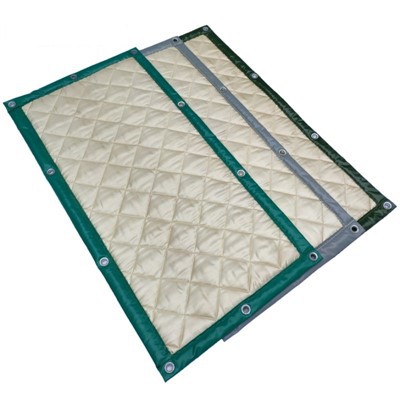
If you’re dealing with noise problems and you think an acoustic noise barrier might be a part of the solution, don’t hesitate to reach out. We’ve got a wide range of noise barriers made from different materials and in various sizes. We can work with you to analyze your specific noise situation and recommend the best solution. Whether it’s a small residential project or a large – scale industrial one, we’re here to help. So, if you’re interested in reducing noise and want to explore your options with acoustic noise barriers, just drop us a line for a free consultation.
Wooden Acoustic Panels References:
- "Fundamentals of Noise and Vibration Control" by Seyed Behzad Yeganeh
- "Noise and Vibration Control Engineering: Principles and Applications" by Leo Beranek
Guangzhou MQ Acoustic Materials Co., Ltd.
Guangzhou MQ Acoustic Materials Co., Ltd. is one of the most professional acoustic noise barrier manufacturers and suppliers in China, featured by quality products and low price. Welcome to buy CE approved acoustic noise barrier in stock here and get quotation from our factory. We also accept customized orders.
Address: Room D403, KeZhu Business Building, ZhuJi Road, TianHe District, GuangZhou, China
E-mail: Lizzy@mq-acoustics.com
WebSite: https://www.acoustic-projects.com/
