If you’ve ever searched for cut-resistant gloves, you’ve probably spotted two types in store displays or supplier catalogs: some with a smooth, almost imperceptible outer layer, and others with a textured, grippy surface that looks more like work gloves you’d use for construction. As a cut-resistant gloves supplier who’s spent 12 years refining these products for manufacturing, food service, and automotive industries, one question I get from buyers and end users alike is: “Do cut-resistant gloves have a smooth surface?” Cut-resistant Gloves

It’s a fair question. Surface texture might seem like a small detail, but it ties directly to comfort, dexterity, and, most importantly, the glove’s core purpose: stopping cuts. To answer it properly, you have to dig into the science of cut resistance, the materials we use, and how surface design balances protection with real-world usability.
First, let’s break down what makes a glove cut-resistant in the first place. Traditional work gloves—cotton, leather, even standard nitrile—won’t stop a sharp knife or a flying metal shard. Cut-resistant gloves rely on high-performance fibers, usually blended into a fabric structure that’s tight and dense enough to resist blade penetration. The most common fibers are aramids (like Kevlar), polyethylene (UHMWPE, which is five times stronger than steel at the same weight), and stainless steel alloys. Each of these has different properties, and those properties directly impact the surface of the finished glove.
For example, raw UHMWPE fiber is incredibly smooth by nature. Its molecular structure is designed to be low-friction, which is why it’s used in things like fishing lines and bulletproof vests. When we weave UHMWPE into a cut-resistant glove fabric, that inherent smoothness often translates to a sleek, matte outer surface. That’s not just a coincidence—we build that smoothness on purpose for a few key reasons. If the fabric surface is rough or has loose fibers, a blade can catch on those strands, pulling them apart and creating a weak spot where a cut can slip through. A smooth, uniform surface eliminates that risk.
Aramid fibers, on the other hand, are a bit more rigid. They have a slightly stiffer molecular structure, so woven aramid fabrics often have a softer, more textured surface than UHMWPE, but it’s still far smoother than a standard cotton work glove. We typically finish aramid gloves with a thin coating of polyurethane or nitrile to add grip, even though the base fabric is already cut-resistant. That coating creates a smooth, slightly grippy surface that doesn’t catch on small parts or workpieces, which is critical for industries like electronics assembly where dexterity matters as much as protection.
Stainless steel fiber gloves are the exception here. The metal strands give the fabric a more textured, rigid surface, but even then, most modern stainless steel cut-resistant gloves have a smooth outer coating to reduce snagging. If you’ve ever tried to work with a rough metal glove, you know it can scratch workpieces, catch on fabric, or even irritate your hands during long shifts. So even the “textured” cut-resistant gloves we supply have a smooth outer layer to solve those problems.
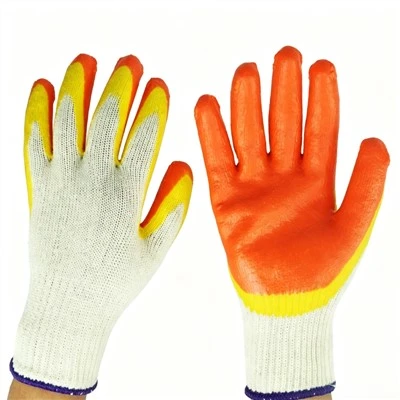
Wait a second—does that mean every cut-resistant glove has a smooth surface? No, not entirely. There are specialty cases where a textured surface is necessary, but those are rare and always engineered, not accidental. For example, some gloves designed for heavy-duty demolition work have a thicker, more textured rubber coating on the palms to improve grip on metal beams or rough concrete while retaining cut resistance on the fingers. Even then, the base cut-resistant fabric under the coating is smooth, and the textured rubber is applied in a way that doesn’t create loose fibers that could be cut.
The key here is that surface smoothness isn’t just a cosmetic feature—it’s a critical part of the glove’s cut resistance and overall performance. I’ve seen too many gloves from cheap suppliers that skimp on the finish, leaving loose fibers or a rough surface. Those gloves might label themselves as cut-resistant, but in real use, a sharp blade can catch on the rough strands, slice through, and cause a serious injury. That’s why at our company, we test every batch of gloves not just for cut resistance (using standards like EN 388 or ANSI/ISEA 105, the two main global benchmarks for cut resistance) but also for surface uniformity. We run samples through a blade test where we measure how much the surface texture affects cut performance—if a rough spot reduces a glove’s cut level by even one rating, we adjust the coating or fabric design immediately.
Let’s talk about why this matters for different industries, because that’s where the rubber meets the road (pun intended). For food service workers, for example, a smooth surface is non-negotiable. If a glove is rough, it can scratch or contaminate food, and loose fibers can flake off into ingredients. We supply gloves to bakeries and meat processing plants that have a food-safe, smooth outer coating, so they’re not just cut-resistant but also easy to clean and compliant with food safety regulations. A textured glove would be a liability there—you can’t scrub a rough surface free of food debris as easily, and that debris can harbor bacteria.
For automotive assembly lines, workers handle small screws, wires, and sharp metal edges. They need dexterity to fit parts together, so a smooth surface lets them feel what they’re handling without the glove’s texture getting in the way. If the glove is textured, it can make it hard to grip tiny parts, leading to dropped tools or misaligned components. We actually run dexterity tests with our automotive clients: workers complete a puzzle or assemble a small electronic part while wearing our gloves, and we adjust the surface coating until it’s smooth enough for them to manipulate small objects easily, while still passing the required cut resistance test for handling metal parts.
For warehouse and logistics workers, the balance is a bit different. They need gloves that can resist cuts from cardboard boxes, metal strapping, and pallets, but also have enough grip to move heavy packages. Many of our warehouse gloves have a smooth base fabric with a thin, textured rubber coating on the palms—wait, so that’s a textured surface, right? It is, but the key is that the smooth base cut-resistant fabric is still there, and the textured coating is only on the palm area. The back of the hand, which is more likely to be exposed to a stray cut, remains smooth and consistent. That design solves the problem of grip without sacrificing protection on the high-risk areas.
I get asked sometimes why some cut-resistant gloves look like they’re fuzzy or have a soft, textured inner lining. That’s a different part of the glove—this is the inner surface that touches your skin, not the outer surface that faces the blade. The inner lining is often made of a soft, breathable fabric for comfort, and it can be textured for extra cushioning. But that doesn’t affect the outer surface, which is the part that interacts with hazards. So when people ask if cut-resistant gloves have a smooth surface, they’re almost always talking about the outer side, and the answer is yes—with very few, carefully designed exceptions.
Now, let’s address a common myth I hear from new buyers: “If the glove is smooth, it must be flimsy, so it won’t resist cuts.” That’s not true at all. The smooth surface we use isn’t a weak layer—it’s a finish that protects the underlying cut-resistant fabric. The fabric’s strength comes from the fibers, not the coating. We test this by applying a blade to the outer surface, with a sharp blade moving at a set speed and force. The smooth coating doesn’t hold the cut back alone, but it works with the dense fiber structure underneath to stop the blade from penetrating. If we removed the smooth coating, the cut resistance would stay roughly the same, but the glove would snag easily, fray after a few uses, and be more likely to allow a cut.
I remember a story from a client who switched to our gloves after years of using a cheaper, uncoated cut-resistant glove. They told me that their workers were getting cut on average once every two weeks, because the rough fabric would fray along the edges, creating loose strands that blades would catch. After switching to our smooth, coated gloves, cut incidents dropped by 90% in the first month. That’s the difference a well-designed surface makes. The smooth finish isn’t just for show—it’s a safety feature that many suppliers overlook, but we prioritize it because we’ve seen the impact it has on workers’ daily safety.
So, to wrap this up: Do cut-resistant gloves have a smooth surface? For most applications, yes. The science of cut resistance, combined with real-world usability, means that a uniform, smooth outer surface is the best design for balancing protection, dexterity, and durability. There are specialty cases where a textured surface is necessary, but those are engineered carefully to avoid compromising cut performance. As a cut-resistant gloves supplier, we don’t cut corners on the surface design because we know that it’s what keeps workers safe and makes their jobs easier.
Household Gloves If you’re sourcing cut-resistant gloves for your team and want to make sure you’re getting the right product for your specific industry—whether that’s food service, manufacturing, automotive, or logistics—we’d be happy to help you evaluate options. We can share test results, talk through surface design tradeoffs, and find a glove that meets your safety standards and workers’ needs. Don’t hesitate to reach out to our team to start a conversation about your requirements.
References
- ANSI/ISEA 105-2021, American National Standard for Cut-Resistant Gloves. International Safety Equipment Association.
- EN 388:2016, Protective Gloves Against Mechanical Risks. European Committee for Standardization.
- Horrocks, A. R., & Anand, S. C. (2000). Handbook of Technical Textiles. Woodhead Publishing.
- "Cut Resistance in High-Performance Fiber Fabrics." Journal of Textile and Apparel, Technology and Management, Vol. 8, No. 2, 2013.
- Occupational Safety and Health Administration (OSHA). "Hand Protection for Construction Workers." OSHA Publication 3151, 2019.
Shanghai Haokuo Security Technology Co., Ltd.
With abundant experience, we are one of the most professional cut-resistant gloves manufacturers and suppliers in China. We warmly welcome you to wholesale premium cut-resistant gloves in stock here and get free sample from our factory. All customized products are with high quality and low price.
Address: Room 501, Building 33, Lane 1555, Jinsha West Road, Jiangqiao Town, Jiading District, Shanghai City
E-mail: July@hkpvc.com
WebSite: https://www.hkglove.com/
