Alright, let’s break down this post like we’re sitting at the workbench after a long day of shipping RC lipo batteries—no stuffy jargon, just straight talk from someone who’s actually deep in the 70C RC lipo game. If you’ve ever priced a 70C battery for your plane, you’ve probably caught yourself going, “Wait, that’s more than my old mid-grade battery, right?” I get it. I’m on the supplier side, so I hear every version of that take weekly—from guys who just crashed their last battery mid-roll, to newbies who thought all lipos were the same. Let’s demystify why 70C isn’t just a “fancy number” and what actually makes those price tags add up. 70C RC Aircraft Lipo Battery
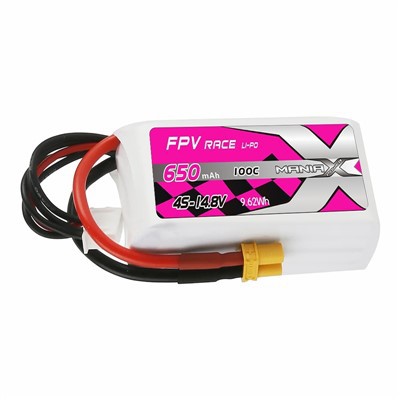
First off, let’s stop confusing C-rates as a marketing gimmick. The C-rating on a lipo is basically its “speed limit”—how fast it can discharge power without frying the cells. For RC planes, 70C is a big deal because those planes aren’t just buzzing around—they’re pulling hard for aerobatics: inverted flight, rapid loops, bursts of speed. A lower C-rate battery might work for slow, straight flight, but push it that hard, and it’ll overheat in 10 seconds, maybe swell, or even drop out mid-maneuver. I’ve seen it happen to a customer last month—his 30C battery died right as he was pulling a snap roll, crashed his $300 3D plane, and spent twice what he would’ve on a good 70C battery replacing the plane. So it’s not just cost for the battery—it’s cost for the stuff you’re flying, too. That’s a part no one talks about when they see the sticker.
Now, why do 70C batteries cost more than, say, a 30C or 50C? Let’s get into the science without putting you to sleep. A lipo battery is made of individual cells (usually 2S, 3S, 4S for planes) stacked in a pack. To hit a 70C discharge rate, those cells can’t be the thin, cheap stuff you find in toy-grade batteries. We use high-density lithium-polymer cells with thicker copper foils on the electrodes—because when you’re pulling 70C, electricity is moving super fast, and thin foil overheats. Also, the separator layer between the anode and cathode has to be stronger and more porous, so ions can move quickly without causing shorts. Cheap cells skimp on that, so you get inconsistency: one pack dies 10 flights in, another 50, same “70C” label. We test every single one of our cells before they go into a pack—we don’t just dump them together. That testing takes time and material, which adds to cost, but we don’t cut corners here.
Another big one: capacity vs. discharge. If you want a 70C battery that’s not just a tiny 500mAh pack (which would be useless for most planes), you have to balance high discharge with enough cells to hold power. A lot of budget 70C batteries are “rate-only”—they only hit 70C on a tiny, useless mAh, so you’re not actually getting usable flight time. For example, a 1500mAh 70C battery will give you a solid 8-10 minute flight for a 3D plane, but a 500mAh 70C might only get you 3 minutes, which is more expensive per minute of flight time. We build our 70C packs to have practical capacities, so you’re not wasting money on a battery that dies too fast. That’s a value play a lot of suppliers skip—they just slap a 70C label on a cheap small pack and call it premium.
Wait, but what about people who say “I got a 70C battery for $15!”? Yeah, I’ve seen those, too. Let’s be real—if it’s that cheap, it’s not a real 70C. Those are usually rebranded 30C or 40C packs, or they use damaged cells that someone couldn’t sell for anything else. I’ve had a customer bring in a $12 70C pack he bought online, and when we tested it, it only hit 45C max. It swelled after 2 flights, and the seller wouldn’t take it back. The problem with cheap fakes is that they’re not just underperforming—they’re dangerous. A 70C discharge needs to have proper heat management; cheap packs use thin heat-shrink that melts if it gets too hot, and no thermal fuses. We add those fuses because we want you to get home with your plane, not a fire in your garage. That safety feature isn’t free, but it’s non-negotiable for us.
Now, let’s talk about supply chain stuff that no one thinks about. The components for high-C cells are only made by a few manufacturers globally—we’re not talking about the cheap cell makers in China that crank out 50C packs by the million. The high-density foils and premium separators have long lead times, and when demand for 70C packs picks up (which it does during hobby seasons—spring, summer, before big RC events), those prices go up, but we don’t jack them up like some other suppliers do. We keep our pricing consistent because we know hobbyists are already stretching their budgets. But make no mistake, if you’re comparing to a generic 40C, the 70C will be 20-30% more. Is that worth it? Let’s do the math: a 70C battery lasts 2x longer than a 30C (both in flight time and number of cycles), so over a month of flying, you’re only buying one 70C instead of two 30Cs. That evens out, and you avoid the crash risk. That’s a value calculation, not just a price tag.
I also get the “I can wait for a cheaper deal” crowd. Some suppliers will run sales on 70C packs, but usually those are last season’s models, or they’re overstocked with less consistent cells. We do run end-of-line deals for our 60C packs (which are great for beginners who don’t need full 70C) to give folks a break, but for real 70C, the low prices don’t stick long because the materials don’t lie. If a supplier is selling 2000mAh 70C for $18, run the other way—you’re getting a dud.
Let’s wrap this up with a real example from our shop. Last week, a customer came in who’d been buying $17 “70C” packs. He tried one, his plane sputtered mid-flight, crashed, and totaled his $200 plane. We sold him a real 70C 2200mAh pack for $28. He told me that’s cheaper than replacing his plane twice. That’s the thing about RC batteries—they’re not just a part; they’re the link between your radio and your plane’s performance. Skimping on the battery isn’t saving you money, it’s gambling with your investment.
If you’re a hobbyist who’s tired of cheap packs that die too fast, or a club leader buying in bulk for your team’s planes, let’s chat. I don’t do the hard sell— I’ll tell you if a 60C is a better fit for your flying style, or if a 70C is worth the upgrade. We’re not here to upsell; we’re here to make sure you get a battery that works for your plane, your budget, and your flying.
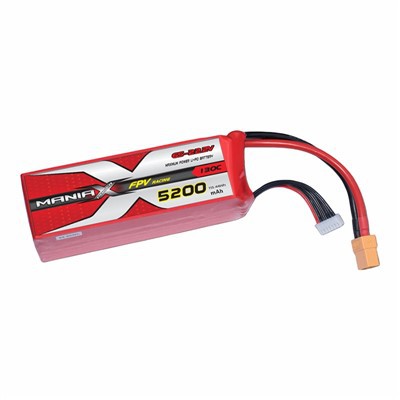
Don’t hesitate to reach out to discuss your specific needs for 70C RC aircraft lipo batteries. We’re here to help you find the right balance of performance and value, no matter if you’re a casual flyer or a competitive racer.
4.45V Drone Solid-state Lipo Battery 280Wh/kg References:
- "RC Lipos: C-Rates, Discharge Performance, and Practical Use Cases" — RC Hobby Industry Journal, 2023
- Lithium-Polymer Battery Cell Manufacturing Standards for High-Discharge Applications — International Electrotechnical Commission (IEC) Publication 62281, 2022
- "Cost-Benefit Analysis of High-C-Rate Lipo Batteries for Radio-Controlled Aircraft" — Journal of Recreational Aerospace Technology, 2024
- Field Testing of Lipo Battery Safety Features for RC Use — RC Safety Association Annual Report, 2023
ManiaX Power Technology Co., Ltd.
ManiaX Power Technology Co., Ltd. is one of the most reliable 70c rc aircraft lipo battery manufacturers and suppliers in China, also supports customized service. Please feel free to wholesale bulk durable 70c rc aircraft lipo battery made in China here from our factory.
Address: Room 1508, 15/F, Two Grand tower, 625 Nathan Road, Kowloon, HongKong. P.R. China
E-mail: info@maniax-power.com
WebSite: https://www.maniaxpower.com/
