In the dynamic world of modern technology, electromagnetic instruments play a pivotal role across various industries, from telecommunications to healthcare, and from automotive to aerospace. As a seasoned supplier of electromagnetic instruments, I’ve witnessed firsthand the transformative power of these devices and the crucial role they play in enabling cutting – edge technological advancements. In this blog, I’ll delve into the fundamental principles behind electromagnetic instruments, shedding light on the science that makes them so indispensable. Electromagnetic instruments

The Basics of Electromagnetism
At the heart of electromagnetic instruments lies the concept of electromagnetism, a branch of physics that deals with the interaction between electric currents and magnetic fields. This fundamental concept was first discovered by Hans Christian Ørsted in 1820 when he noticed that a compass needle was deflected by an electric current. This simple yet groundbreaking observation set the stage for a new era of scientific exploration and technological innovation.
The relationship between electricity and magnetism is summarized by two key laws: Ampere’s law and Faraday’s law of electromagnetic induction. Ampere’s law states that an electric current produces a magnetic field around it. The strength of this magnetic field is directly proportional to the magnitude of the current and inversely proportional to the distance from the conductor. In mathematical terms, Ampere’s law can be expressed as:
$\oint \vec{B} \cdot d\vec{l}=\mu_0I_{enc}$
where $\vec{B}$ is the magnetic field, $d\vec{l}$ is an infinitesimal length element along a closed loop, $\mu_0$ is the permeability of free space, and $I_{enc}$ is the total current enclosed by the loop.
Faraday’s law, on the other hand, describes how a changing magnetic field can induce an electric current in a conductor. This phenomenon, known as electromagnetic induction, is the principle behind the operation of generators and transformers. Faraday’s law is given by:
$\varepsilon = – N\frac{d\Phi_B}{dt}$
where $\varepsilon$ is the induced electromotive force (emf), $N$ is the number of turns in the coil, and $\frac{d\Phi_B}{dt}$ is the rate of change of the magnetic flux $\Phi_B$ through the coil.
How Electromagnetic Instruments Work
Galvanometers
Galvanometers are one of the most basic electromagnetic instruments. They are used to detect and measure small electric currents. A typical galvanometer consists of a coil of wire suspended in a magnetic field. When an electric current passes through the coil, a magnetic force is exerted on the coil according to the motor effect. The motor effect states that a current – carrying conductor placed in a magnetic field experiences a force given by:
$\vec{F}=I\vec{l}\times\vec{B}$
where $\vec{F}$ is the force on the conductor, $I$ is the current, $\vec{l}$ is the length vector of the conductor in the direction of the current, and $\vec{B}$ is the magnetic field vector.
The coil rotates as a result of this force, and the angle of rotation is proportional to the current flowing through the coil. This rotation is measured using a pointer attached to the coil and a calibrated scale, allowing the user to determine the magnitude of the current.
Ammeters and Voltmeters
Ammeters are used to measure electric current, while voltmeters are used to measure voltage across a component in an electrical circuit. Both instruments are based on the principle of the galvanometer.
An ammeter is connected in series with the circuit element through which the current is to be measured. To convert a galvanometer into an ammeter, a low – resistance shunt resistor is connected in parallel with the galvanometer coil. The majority of the current flows through the shunt resistor, while a small fraction flows through the galvanometer. By carefully choosing the value of the shunt resistance, the range of the ammeter can be adjusted.
A voltmeter, on the other hand, is connected in parallel with the component across which the voltage is to be measured. To convert a galvanometer into a voltmeter, a high – resistance multiplier resistor is connected in series with the galvanometer coil. The high resistance of the multiplier ensures that only a negligible current flows through the voltmeter, so it does not significantly affect the voltage being measured.
Electromagnetic Relays
Electromagnetic relays are switching devices that use an electromagnetic coil to control a set of contacts. When a current flows through the coil, a magnetic field is generated, which attracts an armature. The movement of the armature causes the contacts to close or open, thereby controlling the flow of current in another circuit.
Relays are widely used in applications where it is necessary to control a high – power circuit using a low – power signal. For example, in automotive applications, relays are used to control the starter motor, headlights, and other high – power components.
Transformers
Transformers are essential electromagnetic devices used for changing the voltage level of an alternating current (AC) electrical supply. A transformer consists of two coils of wire, known as the primary and secondary coils, which are wound around a common iron core.
When an AC voltage is applied to the primary coil, an alternating magnetic field is produced in the core. This changing magnetic field induces an emf in the secondary coil according to Faraday’s law of electromagnetic induction. The ratio of the secondary voltage to the primary voltage is equal to the ratio of the number of turns in the secondary coil to the number of turns in the primary coil:
$\frac{V_s}{V_p}=\frac{N_s}{N_p}$
where $V_s$ and $V_p$ are the secondary and primary voltages, respectively, and $N_s$ and $N_p$ are the number of turns in the secondary and primary coils, respectively.
Transformers are used in power distribution systems to step up the voltage for efficient long – distance transmission and then step it down for safe use in homes and industries.
Importance of Electromagnetic Instruments in Different Industries
Telecommunications
In the telecommunications industry, electromagnetic instruments are used for a wide range of applications, including signal processing, transmission, and reception. For example, antennas are electromagnetic devices that convert electrical signals into electromagnetic waves for wireless communication. Spectrum analyzers, which are used to measure the frequency spectrum of a signal, rely on electromagnetic principles to analyze and display the signal characteristics.
Healthcare
In healthcare, electromagnetic instruments are crucial for diagnostic and therapeutic purposes. Magnetic Resonance Imaging (MRI) machines use strong magnetic fields and radio waves to generate detailed images of the internal organs of the body. Electromagnetic therapy devices, such as Transcranial Magnetic Stimulation (TMS) machines, are used to treat neurological disorders by applying magnetic fields to specific areas of the brain.
Automotive
The automotive industry relies heavily on electromagnetic instruments for various functions, including engine management, safety systems, and entertainment. Ignition coils, which are electromagnetic devices, are used to convert the low – voltage electricity from the battery into the high – voltage electricity needed to spark the spark plugs in the engine. Anti – lock braking systems (ABS) and electronic stability control (ESC) systems use electromagnetic sensors to measure wheel speed and other parameters to ensure safe driving.
Aerospace
In the aerospace industry, electromagnetic instruments are used for navigation, communication, and control. Gyroscopes, which are based on the principles of electromagnetism and angular momentum, are used to measure the orientation and rotation of an aircraft or spacecraft. Radio altimeters, which use electromagnetic waves to measure the altitude of an aircraft above the ground, are essential for safe takeoff and landing.
Why Choose Our Electromagnetic Instruments
As a leading supplier of electromagnetic instruments, we are committed to providing our customers with high – quality, reliable, and innovative products. Our instruments are designed and manufactured using the latest technologies and materials to ensure optimal performance and durability.
We have a team of experienced engineers and technicians who are dedicated to research and development, continuously improving our products to meet the evolving needs of our customers. Our strict quality control measures ensure that every instrument that leaves our facility meets the highest standards of quality and reliability.
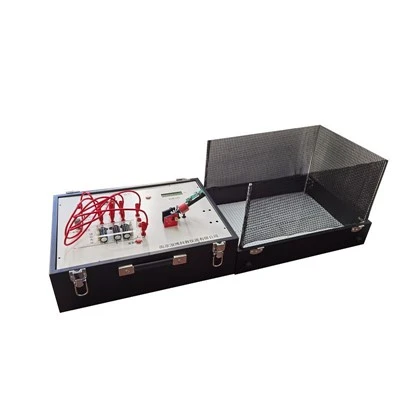
Whether you are in the telecommunications, healthcare, automotive, or aerospace industry, our electromagnetic instruments can provide you with the accurate and precise measurements and control you need. We offer a wide range of products, including galvanometers, ammeters, voltmeters, electromagnetic relays, and transformers, to meet the diverse requirements of our customers.
Optical Instruments If you are interested in learning more about our electromagnetic instruments or would like to discuss your specific requirements, we invite you to contact us for a procurement discussion. Our sales team is ready to assist you and provide you with the best solutions for your application.
References
- Halliday, D., Resnick, R., & Walker, J. (2014). Fundamentals of Physics. Wiley.
- Serway, R. A., & Jewett, J. W. (2018). Physics for Scientists and Engineers with Modern Physics. Cengage Learning.
- Boylestad, R. L., & Nashelsky, L. (2017). Electronic Devices and Circuit Theory. Pearson.
Nanjing Longbow Scientific&Educational Instrument Co., Ltd.
As one of the most professional electromagnetic instruments manufacturers and suppliers in China, we’re featured by quality products and good service. Please rest assured to buy customized electromagnetic instruments from our factory. If you have any enquiry about pricelist, please feel free to email us.
Address: Room D, 22th floor, No.305, North Jiangdong Road, Nanjing,Jiangsu Province, China
E-mail: 79425380@qq.com
WebSite: https://www.lb-physics.com/
